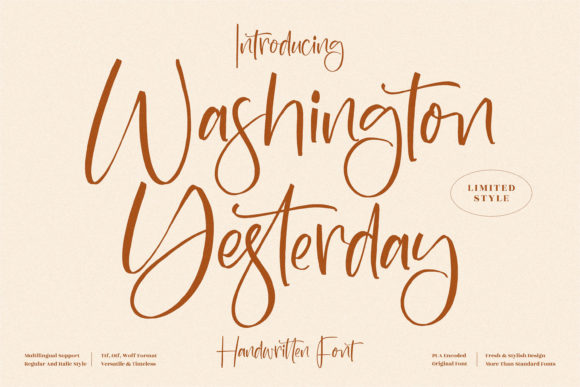
Washington Yesterday: A Playful Script Font for Branding
I opened my design board this morning with a blank slate and a specific challenge. My client needed a visual identity that felt warm, nostalgic, yet undeniably modern. They wanted something that whispered "handmade" without looking amateurish. After cycling through dozens of standard serif font options and rigid sans serif font choices, I decided to take a different route. I pulled up Washington Yesterday, a script typeface that immediately caught my eye in the Fonts library. It wasn't just another decorative type; it had a personality that seemed to dance along the baseline.
First Impressions on the Mockup
The moment I typed the client's proposed name into Washington Yesterday, the mood of the entire project shifted. The characters are charming and playful, possessing a fluidity that feels organic rather than manufactured. Unlike many script font options that can look stiff or overly calligraphic, this one breathes. As I zoomed in on the mockup, I noticed how the loops and curves interacted with each other. It felt like watching someone write quickly but with care, capturing that perfect balance between spontaneity and legibility.
This initial test confirmed that Washington Yesterday belongs in the Script Amp category—it amplifies the emotional connection of a brand instantly. For a small business, whether it is a boutique bakery, a skincare line, or a local coffee shop, the first impression is everything. This creative font does the heavy lifting by establishing a tone of approachability and warmth before the customer even reads a single word of copy.
Testing Versatility Across Brand Assets
Once I was convinced the logo worked, I moved to the next phase: stress-testing the typeface across various brand assets. A great logo design needs to translate well from a tiny favicon to a massive shop sign. I started by placing Washington Yesterday on a packaging label mockup. The result was delightful. The intricate details held up beautifully on the digital representation of a jar, suggesting a premium feel that would work perfectly for artisanal products.
Next, I applied it to a social media graphic template. In the fast-scrolling world of Instagram and Pinterest, visuals need to stop the thumb. The playful nature of the font made the headline pop against a clean background. It didn't compete with the imagery; instead, it complemented it, adding a layer of human touch that stock photos often lack. This versatility is crucial for brand identity systems where consistency across digital and print platforms is key.
I also experimented with it as a display font for a poster design. When used for headlines, Washington Yesterday commands attention without shouting. Its unique character strokes create a rhythm that guides the eye naturally. However, I quickly learned its limitations. While stunning for short phrases, it is not designed for long paragraphs. Using it for body text would sacrifice readability and dilute the impact. It shines best as an accent or headline element, working in harmony with a more neutral supporting typeface.
Mastering Font Pairing and Hierarchy
One of the most critical aspects of using a distinctive handwritten font like Washington Yesterday is knowing what to pair it with. To maintain visual hierarchy and ensure the design remains professional, I paired it with a clean, geometric sans-serif for the body copy. This combination created a striking contrast: the warmth and whimsy of the script balanced by the structure and clarity of the modern typography.
Alternatively, for a more editorial look, I tried pairing it with a classic serif font. This setup evoked a sense of tradition and elegance, perfect for a wedding planner or a heritage brand. The key is to let Washington Yesterday do the talking in the headlines while the secondary font handles the information delivery. This ensures that the visual hierarchy remains intact, allowing the audience to process the message effortlessly.
Practical Considerations for Commercial Use
Before finalizing the brand guidelines, I reviewed the technical specifications of the font file. Washington Yesterday comes with a robust set of features that any professional designer appreciates. The inclusion of alternates and ligatures allows for customization, enabling you to tweak specific letters to avoid awkward collisions or to add a unique flair to the logo. These small details make a significant difference in high-end packaging design and editorial design.
Licensing is another vital factor. Since this is intended for commercial projects, ensuring you have the correct commercial font license is non-negotiable. Whether you are designing merchandise, website headers, or marketing materials, having the legal right to use the typeface protects both the designer and the client. Washington Yesterday offers clear licensing terms, making it a safe choice for freelancers and creative studios alike.
When testing the font for multilingual support, I checked the character map. While it excels in English, designers should always verify if the specific language requirements of their project are met, especially if the brand plans to expand globally. For most local businesses and niche markets, the available glyphs are more than sufficient to cover all bases.
Bringing the Vision to Life
As I finalized the presentation for the client, I reflected on how Washington Yesterday transformed the project. What started as a generic concept evolved into a cohesive, emotionally resonant brand story. The font didn't just sit on the page; it brought the brand to life. It suggested a narrative of craftsmanship, joy, and authenticity.
For anyone looking to elevate their web design or print collateral, this premium font is a worthy addition to your toolkit. It works exceptionally well for entrepreneurs and small business owners who want to stand out in a crowded market. Whether you are creating a business card, a product label, or a homepage hero section, the ability to inject personality into your design is invaluable.
My advice? Don't be afraid to experiment. Test Washington Yesterday in different sizes, weights, and contexts. See how it interacts with your color palette and imagery. Like any good tool, its effectiveness depends on how skillfully you wield it. But when used correctly, it has the power to make your most creative ideas stand out, turning a simple design project into a memorable brand experience.